








Introduction
Commercial flights face delays, weather changes, and technical issues every day. Security incidents are far less common, which is why the events surrounding the easyjet flight u24429 emergency attracted so much attention. Despite dramatic headlines that circulated online, the outcome tells a different story. A trained crew followed established procedures, passengers remained safe, and the aircraft returned to Lyon without injuries.
The incident demonstrates how modern aviation is designed to handle unexpected situations. Rather than taking unnecessary risks, the pilots made a decision that prioritized safety over schedule, proving once again that preparation matters more than panic.
What Happened During the Flight?
The easyjet flight u24429 emergency involved a scheduled easyJet service traveling from Lyon Saint-Exupéry Airport in France to Porto, Portugal. The aircraft assigned to the route was an Airbus A320, one of the airline’s most frequently used short-haul aircraft.
Shortly after departure, the flight crew became aware of a serious disturbance inside the cabin. Reports indicated that a passenger experienced what appeared to be a mental health crisis and attempted to approach the cockpit.
Although reinforced cockpit doors prevent unauthorized access, any attempt to interfere with the flight deck is treated as a significant security threat. The cabin crew reacted immediately while informing the pilots of the developing situation.
Instead of continuing toward Portugal, the pilots chose to return to Lyon, where emergency services and airport authorities were ready to respond.
The Timeline of the Incident
Departure From Lyon
The flight departed normally with no reports of technical problems before takeoff.
Cabin Disturbance
Within a short time after becoming airborne, cabin crew noticed disruptive behavior from one passenger. Witness accounts later described an attempt to move toward the cockpit area, creating concern for everyone onboard.
Emergency Declared
As the situation unfolded, the crew declared an emergency and coordinated directly with air traffic control. This gave the aircraft priority handling while returning safely to Lyon.
Safe Landing
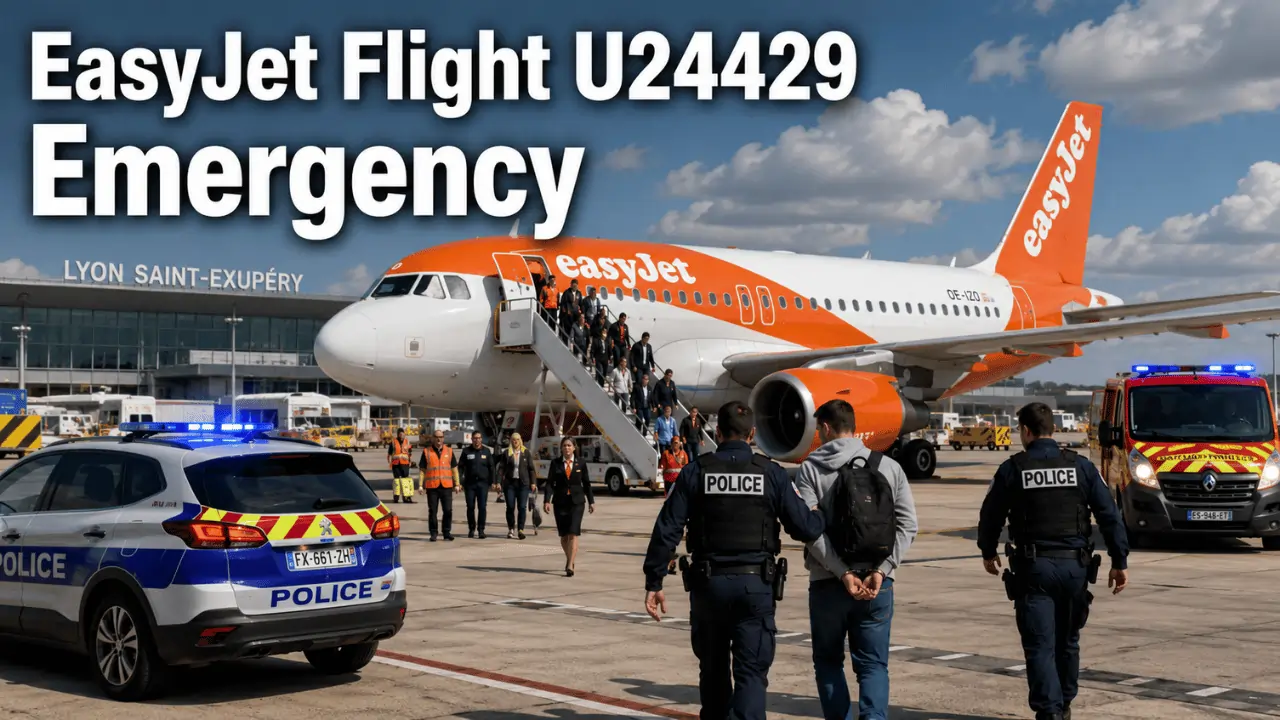
The aircraft landed without incident. Police and medical personnel met the flight after arrival, and the disruptive passenger was removed for further assessment.
Why the Pilots Turned Back
The easyjet flight u24429 emergency was not caused by engine failure, severe weather, or a problem with the aircraft itself.
Instead, it was a security decision.
Pilots are trained to evaluate risk continuously throughout every flight. When a situation inside the cabin creates uncertainty, returning to the nearest suitable airport is often the safest course of action.
Continuing a journey with an unresolved security concern would expose passengers and crew to unnecessary risk. By returning early, the crew ensured that trained authorities could take control of the situation as quickly as possible.
Cabin Crew Made the Difference
Cabin crew members receive extensive training that goes well beyond customer service.
They learn how to identify threatening behavior, communicate with the flight deck under pressure, manage frightened passengers, and restrain individuals when safety is at risk.
During the easyjet flight u24429 emergency, those skills became essential.
According to reports, crew members responded quickly while passengers who were nearby also assisted in controlling the situation until the aircraft landed.
This coordinated response helped prevent further escalation inside the cabin.
Understanding the Emergency Declaration
When an aircraft declares an emergency, it does not automatically mean the aircraft is in danger of crashing.
An emergency declaration simply tells air traffic controllers that the flight requires immediate priority.
In this case, the declaration allowed controllers to provide the quickest routing back to Lyon while airport emergency services prepared for the aircraft’s arrival.
These procedures exist so crews can focus on flying the aircraft instead of worrying about delays or airport coordination.
Why Cockpit Security Is Taken So Seriously
Commercial aviation security changed significantly over the past two decades.
Modern cockpit doors remain locked during flight, and strict procedures control every opening of the flight deck.
Because of these protections, even an unsuccessful attempt to reach the cockpit receives immediate attention from pilots and airline security teams.
The easyjet flight u24429 emergency illustrates why airlines refuse to underestimate these situations. Acting early reduces the chance that a difficult situation becomes a dangerous one.
Police Response After Landing
After returning to Lyon, local authorities boarded the aircraft.
The passenger involved in the disturbance was removed from the flight and reportedly evaluated by medical personnel.
No injuries to passengers or crew were reported during the incident.
Once airport authorities completed their work and the aircraft was cleared to continue, the remaining passengers were able to resume their journey to Porto.
That outcome reflects the effectiveness of coordination between the airline, airport staff, emergency responders, and law enforcement.
EasyJet’s Position
EasyJet confirmed that the aircraft returned because of a disruptive passenger.
The airline emphasized that passenger and crew safety remained its highest priority throughout the incident.
This response aligns with standard aviation practice. Airlines regularly place safety ahead of operational convenience, even when diversions create delays and additional costs.
What Travelers Can Learn From This Incident
The easyjet flight u24429 emergency serves as a reminder that airline safety depends on preparation rather than luck.
Pilots regularly train for emergency scenarios.
Cabin crews practice responding to disruptive passengers.
Air traffic controllers are prepared to provide immediate assistance.
Airport police and emergency services can respond within minutes when needed.
These layers of planning allowed everyone onboard to reach the ground safely despite an unexpected security event.
For passengers, the best response during situations like this is simple: remain calm, follow crew instructions, avoid speculation, and allow trained professionals to manage the incident.
Separating Facts From Online Speculation
Incidents involving emergency declarations often generate exaggerated stories online.
In the case of the easyjet flight u24429 emergency, the confirmed facts remained consistent across credible reporting. The aircraft did not suffer a reported mechanical failure. Instead, the diversion was linked to a passenger security incident inside the cabin.
Understanding that distinction is important because emergency procedures are designed for far more than technical problems. Security concerns, medical emergencies, and other serious events can all lead pilots to declare an emergency and return to the nearest suitable airport.
Conclusion
The easyjet flight u24429 emergency was a clear example of aviation professionals making the right decision under pressure. The crew recognized a security concern, acted without hesitation, coordinated with air traffic control, and returned safely to Lyon. While the diversion disrupted travel plans, it demonstrated exactly how commercial aviation is supposed to respond when passenger safety is at stake. The incident ended without reported injuries, reinforcing that careful training and decisive action remain the strongest safeguards in modern air travel.
FAQs
1. Why did the flight return to Lyon instead of continuing to Porto?
The pilots determined that resolving the onboard security concern at the nearest suitable airport was the safest option.
2. Was the aircraft experiencing a technical failure?
Available reports indicate the aircraft was not diverted because of a mechanical problem but because of a disruptive passenger incident.
3. Did anyone get hurt during the incident?
Reports stated that no injuries were reported among passengers or crew following the safe landing.
4. What happened after the aircraft landed?
Police boarded the aircraft, removed the disruptive passenger, and medical personnel reportedly assessed the individual before the flight later continued.
5. Why are airlines so strict about cockpit access?
The cockpit is the most secure area of a commercial aircraft. Any attempt to interfere with it is treated as a serious safety issue, even if no entry is gained.
Read More: Giniä: Why a Distinctive Digital Identity Creates Lasting Brand Recognition