








Introduction
Replacing public seating is usually a routine decision that barely attracts attention. That was never going to happen in Kilkee. When kilkee benches replaced plastic became part of local discussion, the reaction quickly moved beyond maintenance schedules and council planning. Residents, visitors, and local supporters looked at the same promenade from completely different perspectives. One side welcomed stronger, longer-lasting seating, while the other questioned whether practicality had come at the expense of a familiar part of the town’s identity. Both opinions deserve attention because this story is about far more than benches overlooking the Atlantic.
A Promenade That Has Always Been Part of the Experience
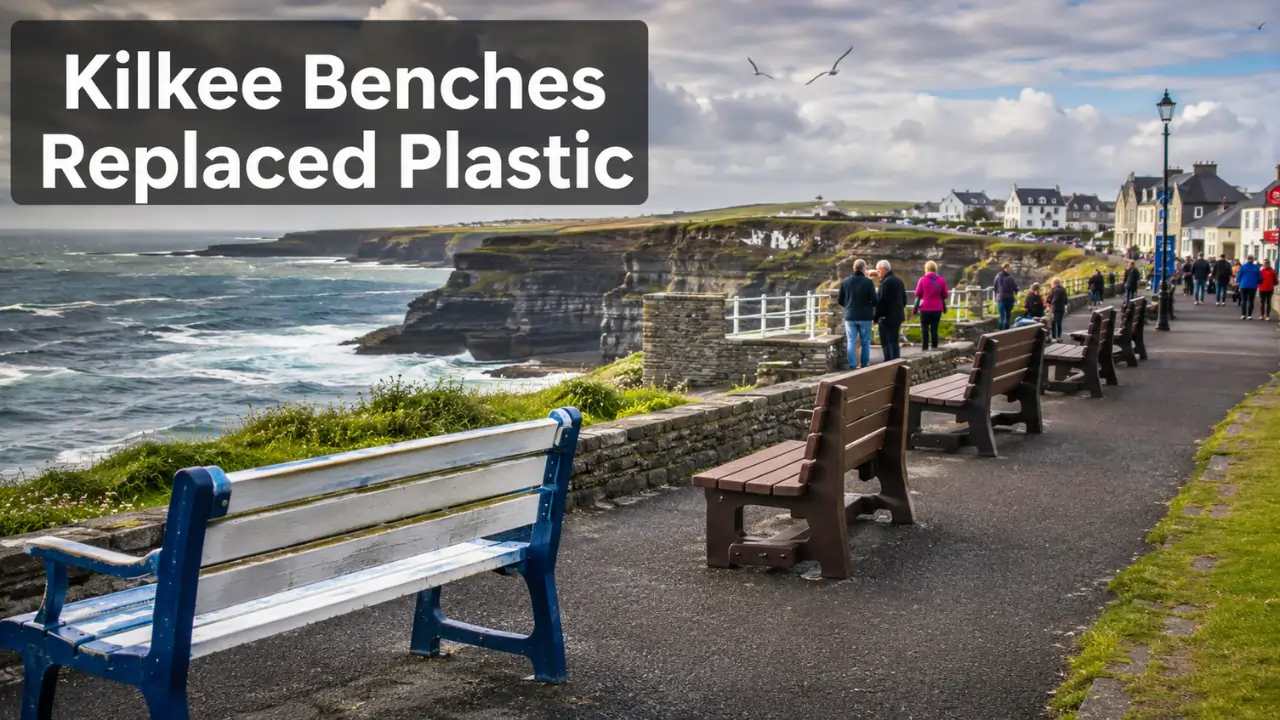
Kilkee’s seaside promenade has long been one of the town’s most recognizable places. Stretching alongside dramatic Atlantic views, it serves as more than a walking route. Families stop to rest, visitors pause to admire the coastline, photographers capture sunsets, and locals meet for casual conversations while looking out across the water.
For years, the traditional blue and white benches quietly became part of that experience. They were never promoted as tourist attractions, yet they appeared in countless holiday photographs and became familiar to anyone who regularly visited the town. Their simple design blended naturally with the promenade instead of competing with the surrounding landscape.
That explains why kilkee benches replaced plastic quickly became a subject of public discussion. The change affected a feature people had come to associate with the character of Kilkee itself.
Unlike large construction projects, replacing benches may appear minor on paper. In reality, small details often shape how people remember a destination.
Why the Original Benches Could Not Stay Forever
Public furniture installed along a coastline faces constant exposure to harsh weather. Sea salt, heavy rain, strong winds, moisture, and changing temperatures gradually weaken traditional materials regardless of how carefully they are maintained.
Wooden benches demand regular attention to remain safe for everyday use. Paint fades under constant sunlight. Timber absorbs moisture. Metal fittings can corrode in salty air. Small cracks eventually become structural concerns that require repair or replacement.
The discussion surrounding kilkee benches replaced plastic cannot be understood without recognizing these practical challenges. Local authorities are responsible for ensuring that public seating remains safe throughout the year. Waiting until benches become unsafe is not a responsible option, especially in a busy coastal destination that welcomes residents and visitors every season.
Replacing older seating before it reaches that stage helps avoid unexpected closures, emergency repairs, and higher long-term costs.
Why Recycled Plastic Was Chosen Instead of Traditional Materials
The decision to introduce recycled plastic seating was based on durability rather than appearance alone.
Unlike timber, recycled plastic does not absorb water. It resists salt damage, does not splinter with age, and requires very little routine maintenance. Coastal councils increasingly consider recycled materials because they remain structurally reliable despite continuous exposure to challenging weather conditions.
The choice made during kilkee benches replaced plastic reflects a wider shift in how public infrastructure is planned. Rather than repeatedly repairing aging furniture every few years, authorities increasingly invest in products designed to remain functional for much longer periods.
This approach also reduces the need for regular repainting, timber replacement, and seasonal maintenance work.
For councils working within fixed public budgets, reducing future maintenance commitments becomes an important part of every infrastructure decision.
Durability Was Only One Part of the Decision
Although strength and longevity played an important role, there were additional reasons supporting the replacement project.
Public seating experiences constant daily use throughout the year. During busy tourist periods, benches are occupied almost continuously. That level of use naturally increases wear on older furniture.
Recycled plastic offers several practical advantages in locations like Kilkee:
- It does not rot after repeated exposure to rain.
- Salt air has less impact on its structure than untreated timber.
- It requires minimal repainting or surface treatment.
- Cleaning becomes quicker and more straightforward.
- The expected service life is significantly longer than traditional wooden seating.
These practical benefits help explain why kilkee benches replaced plastic became part of a broader discussion about managing public spaces more efficiently instead of relying on repeated short-term repairs.
The Community Response Was Never One-Sided
One of the most interesting aspects of kilkee benches replaced plastic was the range of opinions expressed by local residents.
Those who supported the project focused on practicality. From their perspective, stronger seating with lower maintenance costs represented sensible long-term planning. They argued that public infrastructure should first meet safety requirements before considering nostalgia.
Others viewed the situation very differently.
For long-time residents, the original benches represented familiar landmarks rather than simple outdoor furniture. They had watched generations of families use those benches during holidays, community events, and evening walks along the promenade.
Replacing them changed part of the visual identity people had known for decades.
This difference in perspective explains why opinions remained divided even after the installation work was completed.
Neither side ignored the facts.
They simply valued different outcomes.
Why Local Identity Became Part of the Debate
Every town has small features that become part of its personality.
Sometimes it is a historic building.
Sometimes it is an old bridge.
Sometimes it is the colour of seaside railings.
In Kilkee, the traditional promenade seating had quietly become one of those recognizable features.
Visitors often returned year after year expecting to see familiar surroundings. Without consciously noticing every detail, they built lasting memories connected to the appearance of the promenade.
That is why kilkee benches replaced plastic generated discussion beyond maintenance budgets. Residents were asking whether preserving local character should receive greater consideration whenever visible changes are planned.
Public infrastructure does not exist in isolation.
It becomes part of the identity people associate with a place.
Environmental Benefits Added Another Dimension
The replacement project also reflected growing interest in sustainable public infrastructure.
Recycled plastic is manufactured using materials that have already served another purpose instead of relying entirely on newly produced raw resources. Extending the useful life of recycled materials helps reduce waste while supporting more responsible manufacturing practices.
Because recycled plastic lasts longer than traditional timber in coastal conditions, replacement cycles can also become less frequent.
That creates additional environmental advantages over time.
Fewer replacements mean fewer materials consumed, fewer transportation requirements, and reduced maintenance activity throughout the lifespan of each bench.
The environmental case supporting kilkee benches replaced plastic therefore extends beyond recycling alone. It also includes durability, lower maintenance demands, and longer periods between future replacement projects.
Balancing Practical Decisions With Public Expectations
Every public improvement project eventually reaches the same question.
Should functionality always take priority over appearance?
There is rarely a simple answer.
Infrastructure must remain safe, durable, and affordable. At the same time, public spaces also contribute to community identity and visitor experience.
The conversation surrounding kilkee benches replaced plastic highlights the importance of balancing both priorities rather than treating them as competing goals.
Modern manufacturing already offers opportunities to create recycled seating that reflects traditional styles while delivering the durability councils require.
When practical improvements respect local character, communities are far more likely to support change instead of resisting it.
The experience in Kilkee shows that successful public projects are not measured only by how long they last. They are also judged by how well they fit the places they are meant to serve.
Tourism Feels the Impact of Small Changes More Than People Expect
Visitors rarely choose a coastal town because of a single bench, but they remember the complete setting. The promenade, the sea, the cliffs, the railings, the cafés, and the seating all work together to create an impression that lasts long after the holiday ends.
That is one reason why kilkee benches replaced plastic became part of conversations among regular visitors as well as local residents. The benches had quietly become part of the photographs people shared and the memories they carried home. Changing that familiar appearance naturally changed how the promenade felt to those who had visited Kilkee for years.
For first-time visitors, the new benches simply provide a comfortable place to enjoy the coastline.
For returning visitors, the comparison between the old and new seating is unavoidable.
Neither experience is wrong. They simply come from different perspectives.
A Lesson in Public Consultation
Every infrastructure project teaches something beyond its immediate purpose.
One lesson from kilkee benches replaced plastic is that communication matters almost as much as construction.
When communities understand why changes are necessary, discussions often become more productive. Explaining maintenance costs, safety concerns, expected lifespan, and environmental benefits before work begins gives residents an opportunity to understand the reasoning behind the decision.
People may still disagree, but informed disagreement is very different from feeling excluded.
Future projects in coastal towns could benefit from public exhibitions, design previews, or community meetings before installation begins. Even small opportunities for local feedback can improve public confidence and reduce unnecessary frustration.
Good consultation does not guarantee universal support.
It creates trust.
Heritage and Sustainability Can Work Together
The debate surrounding kilkee benches replaced plastic is sometimes presented as a choice between protecting heritage or embracing sustainability.
That creates a false divide.
Modern outdoor furniture is available in styles that reflect traditional designs while using recycled materials beneath the surface. Councils no longer have to choose between durability and appearance.
A recycled bench can respect the visual character of a historic promenade while still delivering the long service life needed for public spaces exposed to harsh coastal weather.
Future improvements in Kilkee and similar seaside towns could benefit from this balanced approach.
Preserving local identity does not require rejecting modern materials.
Using modern materials does not require abandoning local identity.
The strongest public spaces usually combine both.
Financial Planning Shapes Every Public Decision
Infrastructure projects are never judged only by appearance.
Local authorities must consider installation costs, maintenance budgets, repair schedules, inspection requirements, and expected lifespan before approving any investment.
Traditional wooden benches often require repainting, replacement timber, hardware repairs, and regular inspections throughout their life.
Recycled plastic changes that calculation.
Because it withstands moisture and salt exposure more effectively, maintenance requirements become significantly lower over time. That allows councils to direct limited public funds toward other community services instead of repeatedly repairing the same infrastructure.
The financial reasoning behind kilkee benches replaced plastic may not be immediately visible to visitors, but it plays a major role in long-term planning.
Public money is expected to deliver value over decades rather than only during the first year after installation.
Why Design Still Deserves Serious Attention
Durability alone should never become the only measure of success.
Public spaces are used every day, but they are also experienced emotionally. People develop attachments to places because of how they look, not simply because they function well.
That is why design deserves equal consideration whenever infrastructure is replaced.
The discussion surrounding kilkee benches replaced plastic showed that appearance influences public acceptance just as much as material quality.
Future seating projects could take inspiration from the original promenade furniture while incorporating recycled materials beneath a familiar design. Small details such as colour, shape, armrests, and overall style can preserve the atmosphere residents value without sacrificing practical performance.
Communities are far more likely to embrace change when they recognize their own identity within it.
What Other Coastal Communities Can Learn
Kilkee is not the only seaside town facing these decisions.
Across coastal regions, councils continue replacing aging public furniture exposed to harsh marine environments. Every community must balance the same competing priorities.
Safety cannot be ignored.
Maintenance costs cannot be ignored.
Environmental responsibility cannot be ignored.
Local character should not be ignored either.
The experience of kilkee benches replaced plastic demonstrates that infrastructure projects achieve better outcomes when practical improvements are combined with thoughtful design and meaningful public engagement.
Other towns considering similar upgrades can learn from both the practical success of the project and the public discussion that followed.
The strongest solutions rarely focus on one objective alone.
They respect the people who use the space every day.
Looking Ahead
The conversation around kilkee benches replaced plastic is unlikely to disappear soon because it reflects a wider question facing communities everywhere.
How should public spaces evolve without losing the qualities that made them memorable in the first place?
There is no universal answer.
Each town has its own history, landscape, and identity.
What remains clear is that infrastructure should never be viewed as ordinary. Benches, pathways, lighting, railings, and public seating quietly shape the experience of every resident and visitor.
When those features change, people notice.
That makes careful planning more important than ever.
Final Thoughts
The story behind kilkee benches replaced plastic is not simply about replacing old seating with recycled materials. It is about finding the right balance between responsible public investment, environmental thinking, and preserving the character that gives a coastal town its identity.
The strongest outcome is not choosing one side of the debate.
It is proving that practical improvements and local heritage can exist together without compromise. When future projects respect both durability and design, communities gain infrastructure that lasts while keeping the places people know and value unmistakably their own.
FAQs
1. Why did Kilkee replace the original promenade benches?
The original benches had aged after years of exposure to coastal weather. Replacing them with recycled plastic seating reduced maintenance needs, improved durability, and helped ensure long-term public safety.
2. Are recycled plastic benches better for coastal locations?
Yes. Recycled plastic resists salt air, moisture, and rot far better than traditional timber, making it well suited for promenades and other exposed seaside environments.
3. Why did kilkee benches replaced plastic receive mixed public reactions?
The project divided opinion because residents valued different priorities. While some welcomed the practical benefits, others felt the traditional benches were an important part of Kilkee’s visual identity and heritage.
4. Could recycled benches have matched the appearance of the older ones?
Modern manufacturing allows recycled materials to be shaped into designs that closely resemble traditional seating. Future projects can combine durability with styles that better reflect local character.
5. What is the biggest lesson from kilkee benches replaced plastic?
The project shows that successful public improvements should balance safety, sustainability, financial responsibility, and community identity instead of focusing on only one of those goals.
Read More: Zoomilla: Property Search, Listing Management, and Agency Solutions