









Introduction
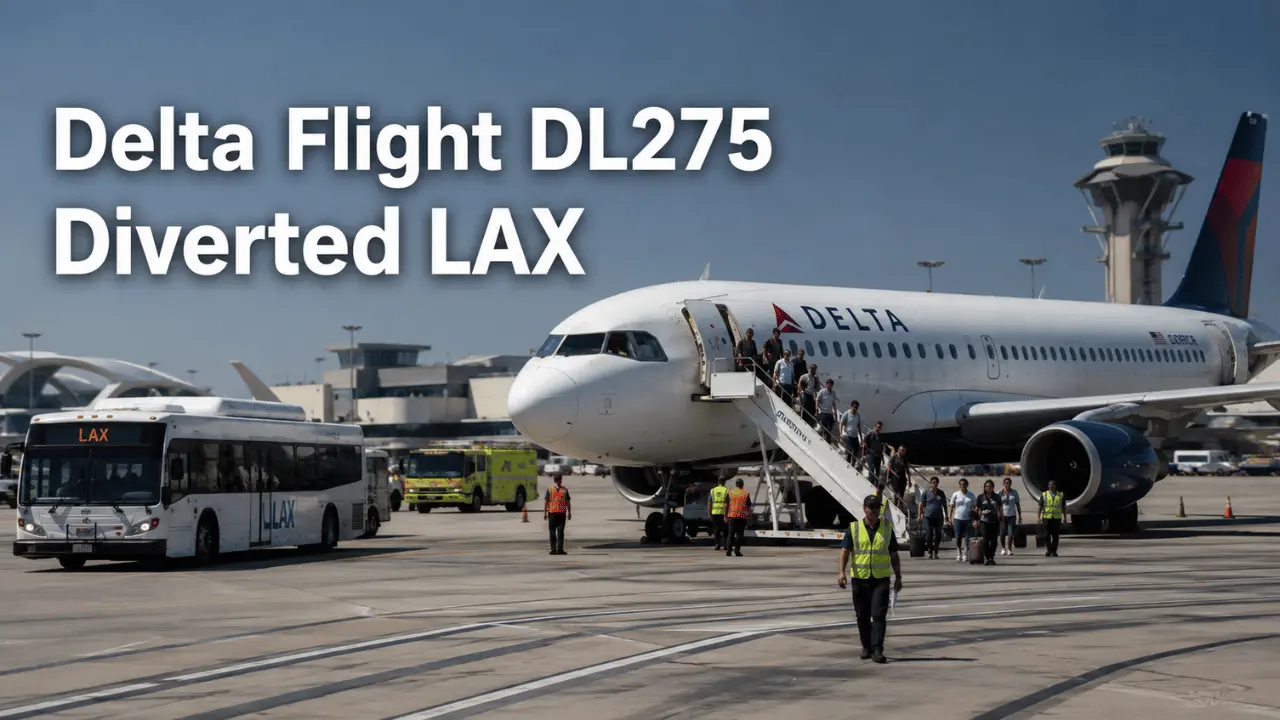
Passengers rarely expect their journey to change course after takeoff, which is exactly why reports surrounding delta flight dl275 diverted lax attracted immediate attention. A diversion naturally raises concern, but the first reaction is often driven by speculation instead of verified information. That approach creates confusion rather than clarity. Commercial aviation follows strict operational procedures, and a diversion is usually the result of a deliberate safety decision, not evidence of panic or failure. Looking at the situation through that lens provides a far more accurate picture than relying on social media rumors or incomplete reports.
Why Delta Flight DL275 Diverted LAX Became a Talking Point
Interest in delta flight dl275 diverted lax increased because flight diversions are highly visible today. Flight tracking websites, passenger posts, and aviation discussion forums can spread information within minutes. The challenge is that these early updates often lack context.
A change in destination does not automatically indicate a major emergency. Airlines and flight crews assess operational conditions continuously throughout every flight. If circumstances change, the safest option may be selecting an alternate airport rather than continuing to the original destination.
That distinction matters because public perception often moves faster than verified facts. People see an aircraft divert and immediately assume the worst, even though commercial aviation is designed to avoid unnecessary risks before they develop into larger problems.
At the time of writing, there has been no comprehensive official public report detailing the exact operational reason behind delta flight dl275 diverted lax. That makes it even more important to separate confirmed aviation practices from online speculation.
Flight Diversions Are Built Into Airline Safety Procedures
Every commercial airline prepares for situations that may require a flight to land somewhere other than its scheduled destination. These procedures are not unusual. They are part of standard airline operations.
Pilots receive extensive training to evaluate changing conditions while working closely with airline dispatchers and air traffic controllers. Their responsibility is not simply to complete the planned route. Their responsibility is to complete every flight safely.
When discussing delta flight dl275 diverted lax, it helps to remember that a diversion can result from circumstances that passengers never notice inside the cabin. Aircraft systems continuously monitor performance, weather information changes throughout a flight, and airport conditions can shift without warning.
Choosing an alternate airport is often the safest and most practical decision available.
Why Los Angeles International Airport Is a Logical Diversion Airport
Not every airport can efficiently support an unexpected arrival from a commercial airliner. Los Angeles International Airport has the infrastructure required to handle aircraft diversions quickly and professionally.
Its operational advantages include long runways capable of accommodating large aircraft, advanced emergency response services, experienced maintenance personnel, and strong airline support facilities. Delta Air Lines also operates significant services through Los Angeles, making it easier to coordinate inspections, replacement crews, and passenger assistance if required.
These operational strengths explain why delta flight dl275 diverted lax immediately appeared reasonable from an aviation perspective. A major international airport provides more options than a smaller regional airport when an aircraft requires additional attention after landing.
Passengers may focus on the inconvenience of arriving somewhere unexpected, but airline operations teams view airport capability as the deciding factor.
Operational Decisions Always Come Before Passenger Convenience
Air travelers understandably want flights to arrive on time. Airlines also benefit from maintaining reliable schedules because delays increase operating costs and disrupt future flights.
Even so, schedule performance never outweighs safety.
If pilots receive information suggesting that continuing the planned route introduces unnecessary risk, airline procedures encourage conservative decision-making. This philosophy has helped commercial aviation achieve an exceptional safety record over decades.
Delta flight dl275 diverted lax reflects that same operational mindset. A diversion may increase costs for the airline and inconvenience passengers, but those outcomes remain secondary whenever safety considerations enter the discussion.
This is why experienced aviation professionals rarely judge a diversion negatively without understanding the circumstances behind it.
Why Early Reports Often Create More Questions Than Answers
Modern technology allows almost anyone to follow a commercial aircraft in real time. While this access has increased public awareness, it has also encouraged rapid speculation.
A flight tracker can confirm that an aircraft changed course.
It cannot explain why.
Passengers may share photographs from inside the cabin without knowing what prompted the diversion. Online comments often combine assumptions with isolated observations until rumors begin circulating as if they were confirmed facts.
That pattern frequently follows reports involving delta flight dl275 diverted lax. Without official statements or verified operational reports, responsible reporting should avoid presenting speculation as established fact.
Waiting for confirmed information is less dramatic, but it is far more reliable.
Passenger Communication Matters Almost as Much as the Diversion
Travelers usually accept that unexpected situations happen. Frustration often begins when communication becomes limited.
Passengers want clear updates about what is happening, how long they may be delayed, and what the next steps will be. Even if airline staff cannot immediately explain every technical detail, honest communication helps reduce uncertainty.
Operational teams often need time to inspect an aircraft, coordinate with maintenance personnel, arrange replacement crews if necessary, and determine whether the same aircraft will continue its journey.
Those decisions cannot be rushed simply because passengers want immediate answers.
Airlines that communicate clearly during disruptions often receive better customer feedback than airlines that remain silent while passengers wait for information.
The public discussion surrounding delta flight dl275 diverted lax highlights how quickly uncertainty grows when official information has not yet caught up with public interest.
Possible Operational Factors Behind Delta Flight DL275 Diverted LAX
Without an official operational report explaining delta flight dl275 diverted lax, assigning a single cause would be irresponsible. Commercial aviation does not work on assumptions, and neither should reporting. Even so, there are established situations that regularly lead airlines to change a flight’s destination.
Aircraft systems constantly monitor engine performance, electrical components, hydraulic pressure, navigation equipment, cabin conditions, and hundreds of other data points. If the flight crew receives an indication that requires closer inspection, continuing to the scheduled destination may no longer be the preferred option.
A diversion is not a sign that the aircraft has failed. More often, it shows that the crew responded exactly as their training requires.
Operational decisions are made using real-time information instead of public expectations, and that remains true whenever conversations focus on delta flight dl275 diverted lax.
Medical Situations Can Change an Entire Flight
Not every diversion begins with the aircraft itself.
A passenger experiencing a serious medical emergency can alter the entire flight plan within minutes. Chest pain, breathing difficulties, severe allergic reactions, or other urgent health concerns may require immediate treatment that cannot be provided in the air.
When that happens, pilots work directly with air traffic controllers to identify the most suitable airport for a safe landing.
Large airports such as Los Angeles International Airport provide quick access to emergency medical teams, hospital transport, and the resources needed to respond without delay.
Because medical events involve personal privacy, airlines rarely release detailed information. That is another reason why public discussions about delta flight dl275 diverted lax should avoid unsupported conclusions.
Weather Does Not Have to Be Severe to Affect Flight Decisions
Passengers often associate diversions with dramatic storms or dangerous weather systems. Aviation professionals know the reality is far more detailed.
Changes in wind direction, visibility, runway conditions, turbulence forecasts, or airport traffic can influence operational planning. Even if weather appears acceptable from the ground, updated information received during the flight may support landing at another airport.
Pilots receive continuous weather updates throughout every stage of a journey. If conditions change, they adjust accordingly.
This careful planning protects passengers while reducing unnecessary operational risk.
For that reason, weather should never be dismissed when evaluating situations like delta flight dl275 diverted lax, even when skies appear calm at the final destination.
What Happens Immediately After the Aircraft Lands
The aircraft reaching the ground is only one part of the process.
Once parked safely, airline teams begin a structured sequence of inspections and operational reviews. Maintenance engineers examine any systems that may have prompted additional attention. Flight crews complete required reports describing the circumstances that led to the diversion.
At the same time, operations staff review aircraft scheduling, crew availability, gate assignments, and passenger connections.
Each department works independently while coordinating with the others.
Passengers often notice only the waiting period, but behind the scenes, dozens of professionals are working to determine the safest and quickest path forward.
That coordinated response is standard practice after situations like delta flight dl275 diverted lax.
Why Airlines Do Not Rush Aircraft Back Into Service
Commercial aircraft generate revenue only when they are flying. Delays cost airlines money through additional staffing, fuel adjustments, scheduling disruptions, and passenger support.
Despite those financial pressures, airlines cannot return an aircraft to service until all required inspections have been completed.
Maintenance engineers follow strict procedures established by aircraft manufacturers, aviation authorities, and airline maintenance programs. If additional checks are necessary, they are completed before passengers board again.
That careful approach explains why delays sometimes last longer than travelers expect.
Safety verification always comes before schedule recovery.
Passenger Rights After a Diversion
A diversion naturally raises questions about rebooking, meals, overnight accommodation, and onward travel.
The support passengers receive depends on the circumstances surrounding the disruption. Operational factors, weather conditions, airport limitations, and applicable regulations all influence the assistance an airline may provide.
Customer service teams normally help passengers with updated itineraries, replacement boarding passes, and connection arrangements whenever required.
If the aircraft cannot continue its journey, airlines may assign another aircraft or move passengers onto different flights.
Every diversion follows its own timeline, making it impossible to apply one solution to every situation involving delta flight dl275 diverted lax.
Why Social Media Should Never Be Treated as the Final Source
Within minutes of an unexpected diversion, screenshots from flight tracking websites begin appearing across social media platforms.
A passenger posts a short video.
Another uploads a photograph from the terminal.
Someone else claims to know the reason.
Before long, speculation spreads faster than verified information.
This pattern has become common across aviation incidents, making responsible reporting more important than ever. Flight tracking data confirms where an aircraft traveled, but it cannot explain operational decisions made inside the cockpit or between airline dispatchers and air traffic control.
Anyone following delta flight dl275 diverted lax should wait for confirmed statements before accepting online claims as fact.
Flight Diversions Show the Safety System Working
Commercial aviation is built around preparation rather than reaction.
Pilots train repeatedly for abnormal situations. Dispatch teams monitor flights throughout their journey. Aircraft transmit performance information continuously. Air traffic controllers coordinate safe routing while airports remain prepared for unexpected arrivals.
Each part of that system exists so that crews can make conservative decisions whenever conditions change.
Passengers may see only an altered flight path.
Aviation professionals see a safety process functioning exactly as designed.
That difference explains why a diversion should not automatically be viewed as a sign that something has gone wrong beyond control.
Final Thoughts
The attention surrounding delta flight dl275 diverted lax reflects how quickly flight movements become public information. Real-time tracking has made aviation more transparent, but it has also increased the spread of incomplete stories before verified facts become available.
The strongest lesson is simple. A diversion is not defined by speculation or online rumors. It is defined by trained professionals choosing the safest available course based on information the public may never see.
Commercial aviation has earned its reputation through careful decisions, disciplined procedures, and a willingness to change plans whenever safety requires it. That remains the most important perspective to keep in mind whenever discussions turn to delta flight dl275 diverted lax.
FAQs
1. Does a flight diversion always indicate a mechanical problem?
No. Aircraft can divert because of medical emergencies, changing weather, airport operational issues, precautionary inspections, or other safety-related considerations. A mechanical issue is only one possible reason.
2. Why would an airline choose Los Angeles International Airport instead of a smaller airport?
Large international airports offer longer runways, experienced maintenance teams, emergency services, airline support facilities, and better options for passenger rebooking, making them practical diversion locations.
3. Can passengers continue their journey on the same aircraft after a diversion?
Yes, if inspections confirm the aircraft is safe to operate. If additional maintenance is required, the airline may arrange another aircraft or provide alternative travel.
4. How do pilots decide whether to continue or divert?
Pilots evaluate aircraft system information, weather updates, operational guidance from dispatch, air traffic conditions, and safety procedures before deciding on the most appropriate course of action.
5. Why is verified information sometimes released hours after a diversion?
Airlines first confirm operational details with flight crews, maintenance engineers, and airport personnel. Releasing verified information takes time, but it helps prevent inaccurate reports from becoming accepted as fact.
Read More: Uyç: A Practical Guide to Education Standards, Qualifications, and Career Development