









Introduction
Every producer reaches the point where the arrangement sounds solid, the mix is taking shape, and the energy is building. Then one question decides whether the track delivers real impact or falls flat: when should you add a drop in a track? There isn’t a magic bar number that works every time. The strongest drops arrive because the music has earned them, not because the timeline says it’s time. A well-timed drop creates excitement, while poor timing can make expensive sounds and polished mixing feel surprisingly ordinary.
Why Timing Matters More Than Loudness
A drop succeeds because of contrast. The listener needs to feel tension before experiencing release. Without that contrast, the biggest bassline or hardest kick drum will not create the excitement you expected.
When deciding when should you add a drop in a track, think about the emotional direction instead of the project timeline. If the arrangement keeps increasing in intensity, the drop should arrive when anticipation reaches its highest point. If it appears too soon, the audience has no reason to feel rewarded. If it arrives too late, the energy begins to fade.
Professional producers focus on momentum rather than rushing to the loudest section.
Reading the Energy Before the Drop
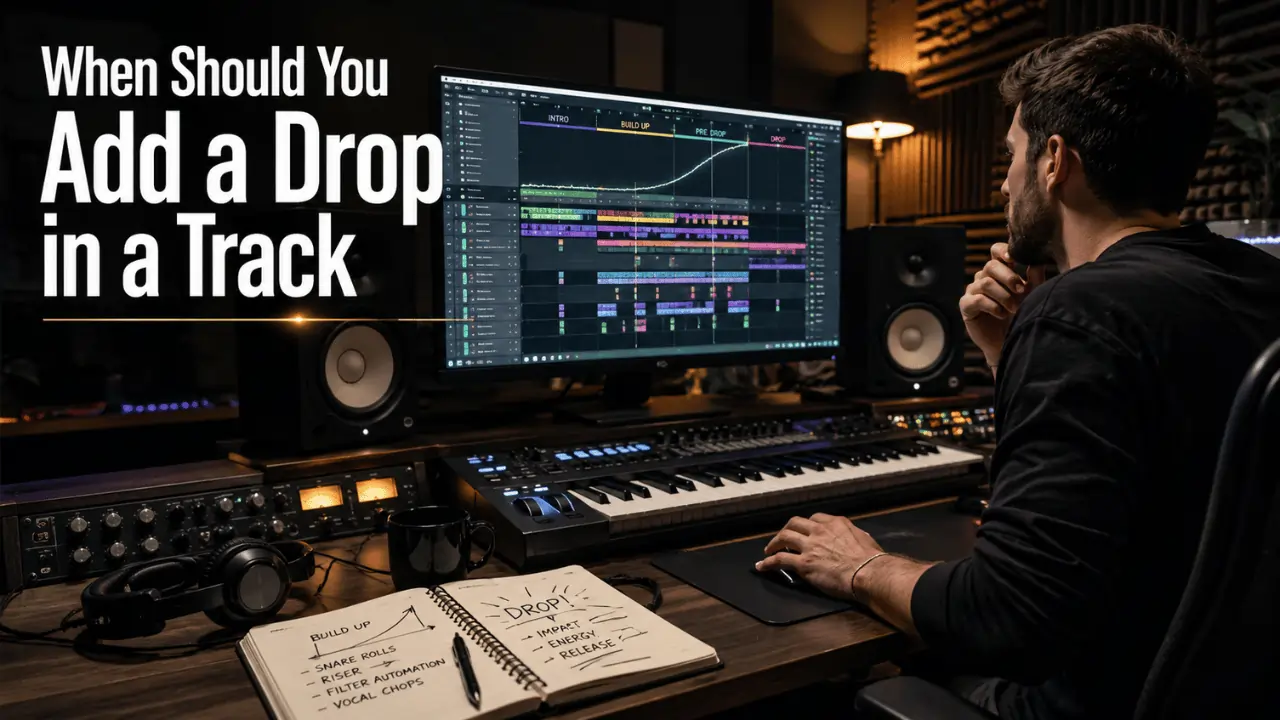
Every section before a drop has a purpose. The intro introduces the atmosphere. The following section builds rhythm and familiarity. After that, the arrangement should begin creating expectation without giving away the payoff.
A strong build-up often includes subtle changes instead of dramatic ones. Percussion becomes more active, filters gradually open, background textures grow wider, and automation increases movement. None of these ideas work on their own. Together, they prepare the listener for a satisfying transition.
When should you add a drop in a track becomes much easier to answer once every musical element points toward the same destination.
Common Song Structures That Support Strong Drops
Most electronic productions follow a familiar flow because listeners naturally respond to it.
Intro
The intro introduces rhythm, atmosphere, and key musical ideas without revealing the most energetic elements.
Main Groove
This section develops the beat and melody while giving listeners enough time to settle into the track.
Build-Up
The build-up increases expectation through automation, fills, risers, and rhythmic movement. Every addition should make the next moment feel bigger.
First Drop
The first drop should feel like a reward. Bass returns, drums hit with full weight, and the arrangement reaches its highest energy level.
Although plenty of tracks place the first drop after 16 or 32 bars, those numbers should never become fixed rules. When should you add a drop in a track depends on how naturally the arrangement reaches its peak.
Don’t Force Every Track Into the Same Formula
Following templates can help beginners learn structure, but relying on them for every production limits creativity.
A fast-paced festival track may need a shorter introduction because the audience expects immediate energy. A melodic production with emotional vocals often benefits from extra space before the first release.
Instead of counting bars, listen for signs that the arrangement feels complete. If the build still has somewhere to go, let it continue. If the tension already feels full, delaying the drop only weakens the impact.
That simple habit answers when should you add a drop in a track far better than memorizing standard arrangements.
Small Changes Create the Biggest Impact
One of the biggest differences between beginner and experienced producers is restraint.
Adding another synth, another riser, or another drum fill rarely fixes a weak arrangement.
Instead, focus on contrast.
Lower the bass volume during the final moments before the drop.
Reduce percussion.
Narrow the stereo image.
Introduce a brief pause before the kick returns.
Those decisions make the drop feel larger without making it louder.
When should you add a drop in a track often becomes obvious after enough contrast has been created.
Genre Changes the Right Approach
EDM
Festival-style EDM usually rewards longer builds because crowds enjoy the anticipation before the release.
House
House music often relies on groove more than dramatic transitions. Shorter build-ups usually maintain better momentum.
Future Bass
Future Bass benefits from emotional chords and melodic movement before introducing brighter leads and stronger drums.
Trap
Trap productions frequently depend on drum fills, vocal pauses, and bass movement rather than extended risers.
Drum and Bass
Because of the faster tempo, Drum and Bass often reaches the drop sooner while keeping enough tension to make the transition exciting.
Every genre has its own pacing, which is why when should you add a drop in a track should always be answered within the style you are producing.
Mistakes That Reduce the Power of a Drop
Several mistakes appear again and again in unfinished productions.
The first mistake is dropping too early. Listeners need time to become invested before the release.
The second mistake is waiting too long. Stretching the build simply because another riser fits often causes excitement to disappear.
Another common issue is filling every frequency before the drop. Without contrast, the biggest section feels almost identical to the one before it.
Weak transitions also reduce impact. Sudden changes without preparation usually sound disconnected instead of exciting.
Avoiding these mistakes makes it much easier to decide when should you add a drop in a track without relying on guesswork.
Testing Your Arrangement Like a Professional
After finishing your arrangement, step away from the project for a while before listening again.
Play the track without watching the timeline.
Ask yourself one question.
Do you naturally expect the drop exactly where it happens?
If the answer is yes, the arrangement is probably working.
If you become impatient before the drop arrives, shorten the build.
If the drop surprises you without enough preparation, strengthen the tension beforehand.
Comparing your arrangement with professionally released tracks in the same genre also helps identify pacing differences without copying creative ideas.
The Second Drop Should Offer Something New
Repeating the first drop exactly often wastes an opportunity.
The second drop should introduce fresh excitement while keeping the original identity.
Small changes usually work better than complete redesigns.
Add an extra lead layer.
Change the drum fills.
Introduce a counter melody.
Use different vocal chops.
Increase bass movement.
These adjustments reward listeners who stay until the end while keeping the arrangement familiar.
When should you add a drop in a track for the second time depends on the energy restored during the breakdown. A dramatic breakdown supports a longer climb, while a lighter breakdown usually benefits from a quicker return.
Trust Your Ears More Than the Grid
Production software makes it easy to focus on numbers, markers, and bar counts.
Listeners never hear those.
They hear emotion, movement, and energy.
The strongest productions reach the drop because every previous section naturally points toward it. That instinct develops through practice, careful listening, and honest editing.
When should you add a drop in a track is not answered by the timeline. It’s answered by the moment your arrangement feels ready to deliver its biggest statement. If you learn to recognize that moment instead of forcing it, every future production will become stronger.
FAQs
1. How can I tell if my drop arrives too early?
If the main section feels less exciting after a few listens, the build probably didn’t create enough anticipation before the drop.
2. Should every song include a drop?
No. Plenty of genres rely on gradual changes in energy instead of one dramatic release. The arrangement should match the style of the music.
3. Is silence before the drop a good idea?
A brief pause often increases impact because it creates contrast and gives the returning drums and bass more weight.
4. Can the first and second drops be different?
Yes. Small changes in melody, percussion, bass movement, or effects help keep the arrangement engaging without losing its identity.
5. What’s the best way to improve drop timing?
Study professionally arranged tracks in your genre, compare the flow with your own production, and make decisions based on how the energy feels instead of following fixed bar counts.
Read More: Riverbank Collapse Iford Playing Fields: Causes, Safety Concerns, and Environmental Impact