








Introduction
The riverbank collapse iford playing fields is more than a local maintenance issue. It highlights how rivers can quietly reshape public spaces until the damage becomes impossible to ignore. A collapsed riverbank affects safety, access, wildlife, and the long-term condition of one of the area’s well-used recreational spaces. Instead of treating the incident as an isolated event, it should encourage better planning and regular monitoring of riverside environments.
A Popular Riverside Location in Bournemouth
Iford Playing Fields is a well-known public green space in Bournemouth, Dorset, located beside the River Stour. Residents regularly visit the area for football, walking, jogging, cycling, dog walking, and family outings. The open fields and riverside setting make it one of the community’s valued outdoor spaces throughout the year.
The peaceful surroundings are one of the reasons the riverbank collapse iford playing fields attracted attention. Visitors who had used the same paths for years suddenly found barriers, damaged ground, and restricted access near the river’s edge.
The incident served as a reminder that even familiar public spaces can change quickly when natural forces are left unchecked.
How the Collapse Changed the Area
A riverbank does not usually fail without warning. Long before the visible collapse, the land often experiences gradual erosion beneath the surface.
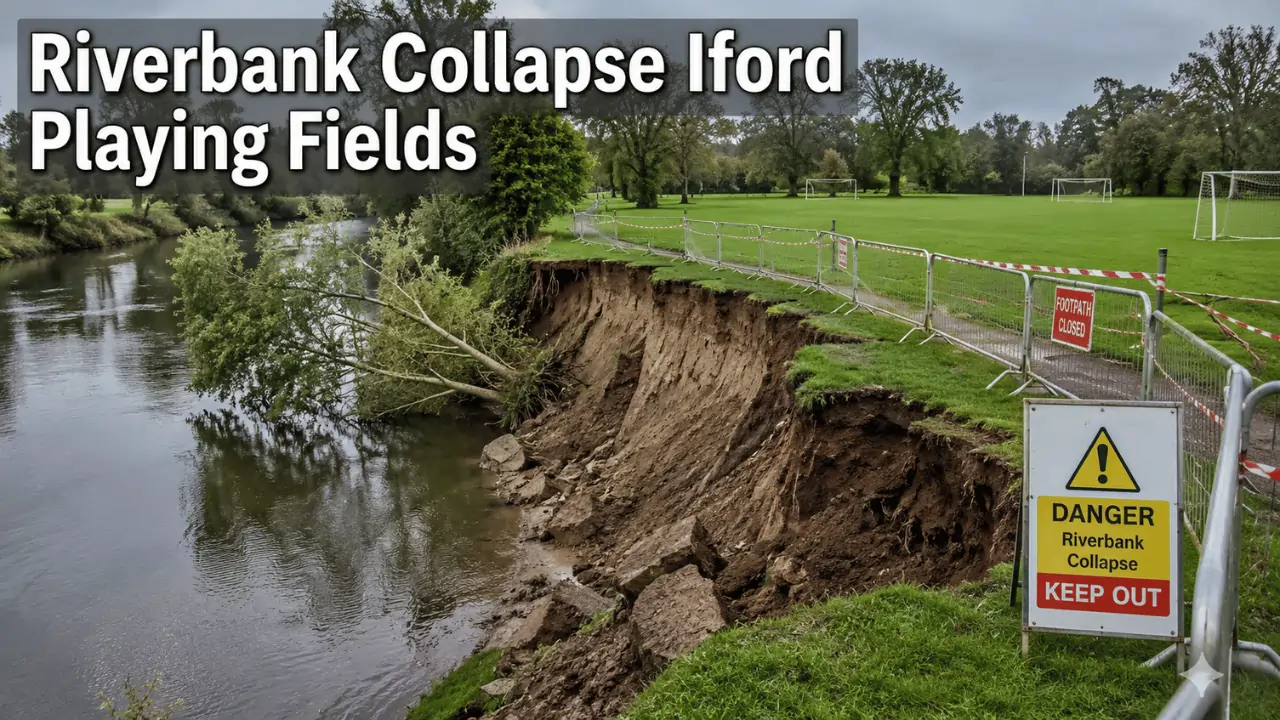
During the riverbank collapse iford playing fields, part of the bank gave way along the River Stour. Sections of soil slipped into the water, and trees close to the edge became unstable. Safety barriers were placed around affected areas to reduce the risk of accidents while assessments could be carried out.
For local visitors, the impact was immediate. Walking routes were interrupted, access near the river became limited, and the appearance of the landscape changed dramatically.
Although the playing fields themselves remained an important community space, the damaged riverbank required careful attention before normal access could safely continue.
Why Riverbanks Collapse Naturally
The riverbank collapse iford playing fields reflects natural processes that occur in rivers across the United Kingdom.
Flowing water constantly removes small amounts of soil from the base of a riverbank. This process, known as erosion, gradually weakens the land above it. At the same time, heavy rainfall increases the amount of water held within the soil, making it heavier and less stable.
Eventually, the unsupported section of land can no longer carry its own weight and collapses.
This type of failure often develops over months or even years before becoming visible.
Natural river movement cannot be stopped entirely, but its effects can be managed through careful maintenance and monitoring.
Factors That Likely Contributed
No single cause is responsible for every riverbank failure. Instead, several conditions usually combine over time.
The riverbank collapse iford playing fields was likely influenced by prolonged rainfall that saturated the ground, ongoing erosion from the River Stour, undercutting beneath the bank, and the additional weight of mature trees growing close to the edge.
Flood conditions can also increase water speed, allowing the river to remove more soil than usual. Once enough material disappears from the base of the bank, the upper section loses support.
These natural processes explain why apparently stable ground can suddenly give way after long periods of gradual change.
Why Safety Became an Immediate Priority
One of the biggest risks after a riverbank failure is assuming the danger has ended once the first collapse occurs.
In reality, damaged ground often remains unstable.
The riverbank collapse iford playing fields created conditions where additional sections could weaken without obvious warning. Cracks beneath the surface are not always visible, making it unsafe for visitors to walk close to the damaged edge.
Temporary fencing and warning signs are important because they protect people from areas where further movement remains possible.
Ignoring these precautions places both visitors and emergency responders at unnecessary risk.
Environmental Effects Beyond the Visible Damage
The effects of the riverbank collapse iford playing fields extend beyond damaged soil.
Vegetation growing along the riverbank helps stabilize the ground through its root systems. When part of the bank collapses, trees and plants may fall into the river, altering the natural flow of water.
Changes in water movement can influence sediment deposits and affect habitats used by fish, birds, and other wildlife. While nature gradually adapts, the original environment may take years to recover.
Protecting riverside ecosystems is therefore just as important as repairing footpaths and restoring public access.
The Importance of Riverbank Management
Repairing a damaged riverbank requires more than replacing lost soil.
Long-term solutions often combine engineering techniques with natural restoration.
Protective stone reinforcement may be installed where erosion is strongest. Native vegetation can then be replanted to help bind the soil together over time. Proper drainage also reduces pressure inside saturated ground after heavy rainfall.
The riverbank collapse iford playing fields demonstrates why regular inspections should be part of ongoing park maintenance rather than a response only after visible damage occurs.
Early intervention is usually less disruptive and less expensive than emergency repairs.
What Visitors Should Keep in Mind
Public parks remain enjoyable places to visit, but riverside areas deserve extra caution after erosion has occurred.
Visitors should stay behind barriers, avoid standing near damaged edges, and follow any temporary route changes introduced during repair work.
Children should be supervised closely around affected areas, and dog owners should keep pets away from unstable ground where loose soil may continue shifting.
Respecting safety measures helps protect both the public and the workers responsible for restoring the site.
Lessons for Other Riverside Parks
The riverbank collapse iford playing fields offers valuable lessons that extend beyond one location.
Rivers naturally reshape their banks over time. Parks located beside rivers should receive regular inspections, particularly after periods of prolonged rainfall or flooding.
Modern surveying methods, including aerial photography and routine ground assessments, can identify signs of erosion before a major collapse occurs.
Investing in preventative maintenance protects public spaces while reducing the likelihood of costly emergency repairs.
Communities also benefit from clear communication whenever safety restrictions become necessary.
Looking Ahead
Natural landscapes will always change, but careful planning can reduce the impact of those changes on public spaces.
The riverbank collapse iford playing fields highlights the need for continued investment in riverside maintenance, environmental protection, and public safety. Addressing erosion early helps preserve valued recreational areas while protecting the River Stour’s natural environment for future generations.
Ignoring small warning signs often leads to larger and more expensive problems. Responsible management remains the most practical way to balance public access with the realities of a changing riverside landscape.
Frequently Asked Questions
1. What caused the riverbank collapse iford playing fields?
The most likely contributing factors include long-term river erosion, saturated soil after prolonged rainfall, natural undercutting at the base of the riverbank, and the added weight of vegetation growing along the edge.
2. Is Iford Playing Fields still open to visitors?
The playing fields may remain open, but access to areas near the damaged riverbank can be restricted while safety inspections and repair work take place.
3. Can another collapse happen in the future?
Yes. Riverbanks continue changing naturally over time, especially after heavy rainfall or flooding. Regular inspections help identify risks before another major failure occurs.
4. How are damaged riverbanks repaired?
Repair work often includes stabilizing the slope, improving drainage, reinforcing vulnerable sections, and planting native vegetation to strengthen the soil naturally.
5. Why is the riverbank collapse iford playing fields important?
The incident demonstrates how natural erosion can affect public safety, local wildlife, and community spaces. It also shows why regular maintenance and early action are essential for protecting riverside parks.
Read More: Yürkiyr: Building Creative Identity Through Consistent Digital Publishing